Las Ramblas: A Walk in Five Steps
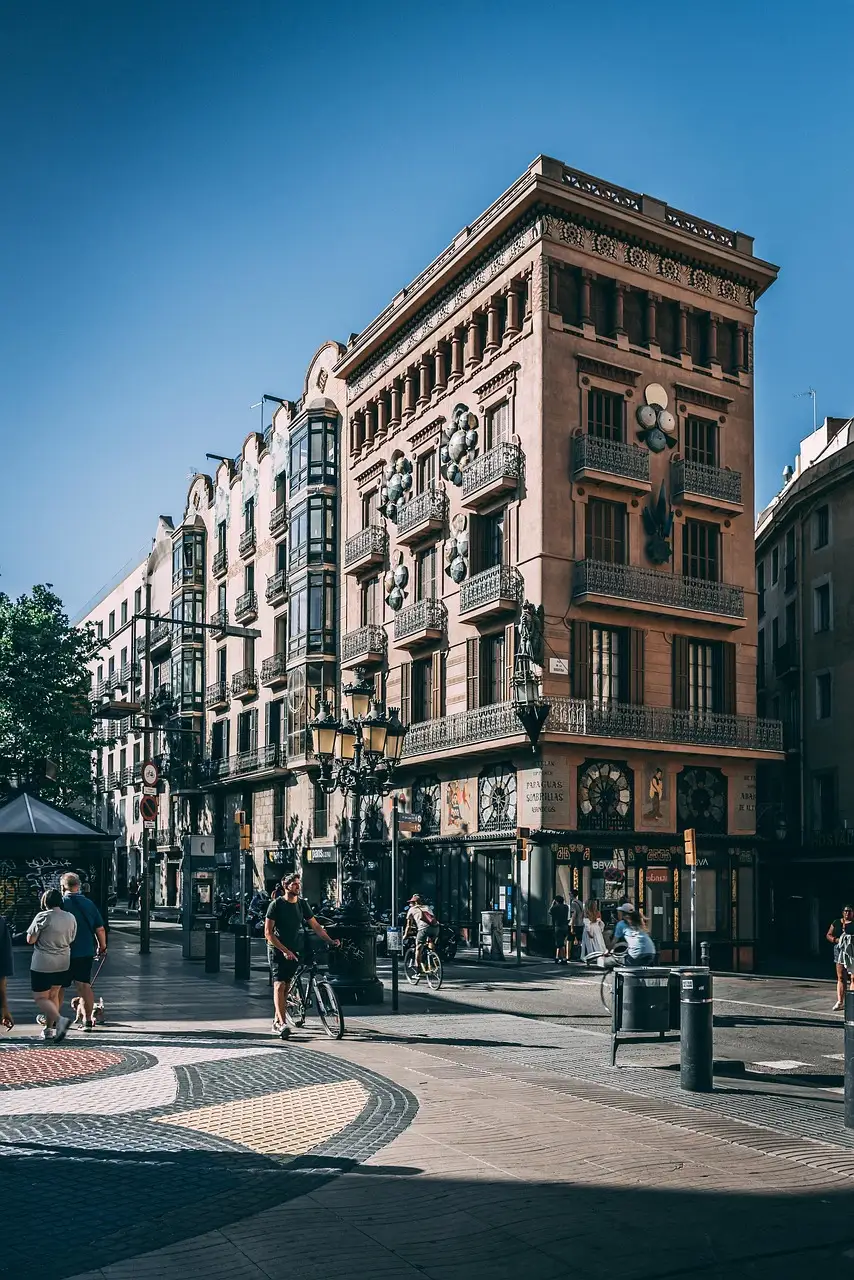
Las Ramblas is the street in central Barcelona that runs about 1.2 km from Plaça de Catalunya down to the Columbus monument at the sea, and you visit it by walking it slowly with a few planned stops. The walk takes five steps, one for each named stretch of the street. Below you get the stops in order, the pickpocket and restaurant traps, and the points where a guide helps.
A famous street is easier to enjoy when you know where it starts, where it ends and what you want from it.
Step 1: Start at Plaça de Catalunya and see the street first
Start at Plaça de Catalunya and walk down toward the sea, because the street is a one-way slope of five named stretches. The first stretch is Rambla de Canaletes, where the 19th-century Font de Canaletes stands. The City Council's guide says that if you drink from it, you are sure to return to Barcelona. Skip the fountain if the tap water does not tempt you, but it makes a good photo.
The street is about 1.2 km long, so the walk is short. You can do it on your own with no ticket. If you want the history of each building, Barcelona local tours cover the area, and the guided walk of Las Ramblas, La Boqueria and the Gothic Quarter costs from €14 a person. It lasts 1.5 hours, starts at Plaça de Catalunya, runs in English and Spanish, and has 4.6 stars from 158 reviews on GetYourGuide, with free cancellation. The site's own count shows how few options name the street: of the 528 Barcelona listings this site counted on GetYourGuide on 26 October 2026, two name La Rambla in the title, from €14 to €26.80 a person.
Step 2: Visit the Mercat de la Boqueria and Rambla dels Estudis
The Mercat de la Boqueria is the one stop worth planning, and the Palau de la Virreina comes just before it. Barcelona's guide calls the market a temple to food. The Mercat de la Boqueria page has more on what to eat there, and its opening hours are not confirmed on an official page we could open, so check them on the day.
Walk slowly here, because the crowd is thickest. The Palau de la Virreina sits on Rambla dels Estudis and the city describes it as a fine example of civil architecture. Eat a snack at the market, then step off the main walk for a full meal.
Pro Tip Keep your phone and wallet in a front pocket at the Boqueria end, where the City Council says pickpockets favour crowded public areas.
Step 3: Pass the Liceu and decide where to eat
You can eat well near Las Ramblas, but the street itself is the wrong place to sit down for a meal. No official page rates the restaurants on La Rambla, so the advice here is simple. Read the printed menu and the prices before you sit down. Walk two or three streets away from the main walk, where the menus are shorter.
The Gran Teatre del Liceu, which the tourist board calls the greatest theatre of Barcelona's opera, stands on the Rambla dels Caputxins stretch. The Liceu metro stop is here too. A few steps away, at La Rambla 35, the Tablao Cordobes flamenco show runs from €35 a person for 70 to 135 minutes. It includes one drink, has 4.7 stars from 5,303 reviews on GetYourGuide and has free cancellation. Children under 4 are not suited to it. Skip it if you would rather end the evening quietly.
Step 4: Watch your bag on Las Ramblas
Pickpockets are the main risk on Las Ramblas, so plan your walk around them. According to the City Council, pickpockets concentrate in places frequented by tourists, and in crowded public areas such as metro stations and monuments. The UK government's travel advice says thieves use distraction techniques and often work in teams. It also says not to carry all your valuables in one place.
Carry a bag that closes, wear it in front and keep your phone away from the edge of tables. If a stranger crowds you or starts a scene, step back and check your pockets. Safety at night is no different. No official page rates the street by hour, and the city's own guide calls it a street that never sleeps.
Key Takeaway Split your valuables between two pockets before you step onto Las Ramblas, so one lost wallet does not end your day.
Step 5: End at the Columbus monument and look up at Montjuïc
The walk ends at the Columbus monument, where La Rambla meets the sea. The tourist board names the Mirador de Colom as the place with a view of the street from above. The last stretch, Rambla de Santa Mònica, is where artists and painters have traditionally worked.
From the port end, Montjuïc rises to the west. The Montjuïc cable car return ticket is from €19 a person and has 4.5 stars from 25,112 reviews on GetYourGuide, with free cancellation. It runs from Turisme de Barcelona and carries you to the Castell de Montjuïc, but the ticket does not cover the castle itself. You can buy Montjuic castle admission separately, and the Montjuïc page shows how the hill fits a half day.
The City Council's works page says the street is being rebuilt, with an overall completion date of February 2027. Walkers keep access, and the central section is worked in halves so people can always pass. Expect some fences, and skip the walk on a very crowded day if you dislike them.
| Step | What to do | What to watch for |
|---|---|---|
| 1. Plaça de Catalunya | Start at the top, see the Canaletes fountain | The street is 1.2 km, so no ticket is needed |
| 2. Boqueria | Visit the market and the Virreina palace | The crowd is thickest here |
| 3. Liceu | Pass the opera house and pick a meal away from the main walk | Read the menu prices before you sit |
| 4. Safety | Carry your bag in front and split your valuables | Pickpockets work in crowds and in teams |
| 5. Columbus monument | End at the sea and look up at Montjuïc | Works run to February 2027 |
Add a guide or a show to your walk
Three picks that fit this walk: a guided walk of Las Ramblas, La Boqueria and the Gothic Quarter from €14 a person, a flamenco show in a venue on La Rambla from €35, and the Montjuïc cable car from €19, each with free cancellation as GetYourGuide shows it.
-
Las Ramblas, La Boqueria and Gothic Quarter walk
from €14 per person
The same walk with a guide, 1.5 hours, starting at Plaça de Catalunya.
1 h 30 min 4.6 (158 reviews) Free cancellation
Run by Barcos de Barcelona
Check availability: Las Ramblas, La Boqueria and Gothic Quarter walk on GetYourGuide -
Tablao Cordobes flamenco show
from €35 per person
An evening show in a venue at La Rambla 35, near the middle of the street.
70–135 minutes 4.7 (5,303 reviews) Free cancellation
Run by Tablao Flamenco Cordobes Barcelona · not suitable for children under 4 years
Check availability: Tablao Cordobes flamenco show on GetYourGuide -
Montjuïc cable car return ticket
from €19 as listed
The next stop after Las Ramblas, with views from the hill above the port.
4.5 (25,112 reviews) Free cancellation
Run by Turisme de Barcelona
Check availability: Montjuïc cable car return ticket on GetYourGuide
Prices and ratings as shown on GetYourGuide on 25 October 2026.
Montjuïc: cable car, Magic Fountain and museumsFAQ
What is Las Ramblas?
Where is Las Ramblas?
What does Las Ramblas mean?
How long is Las Ramblas?
Is Las Ramblas safe?
Is Las Ramblas safe at night?
Conclusion
Walk Las Ramblas from the top to the sea, stop at the fountain, the market and the opera house, and keep your bag in front of you the whole way. The street is short, so the visit is easy to fit between two bigger plans. Book a guide only if you want the stories behind the buildings, and check the City Council's page for works before you go.
Related guides
Sources
- Barcelona City Council, La Rambla (Conoce BCN), last checked 26 October 2026
- Turisme de Barcelona, La Rambla, last checked 26 October 2026
- Barcelona City Council, The project (works on La Rambla), last checked 26 October 2026
- Barcelona City Council, Safety (International Welcome), last checked 26 October 2026
- UK Foreign, Commonwealth and Development Office, Spain safety and security, last checked 26 October 2026