Barcelona Sants Train Station: A Step-by-Step Guide
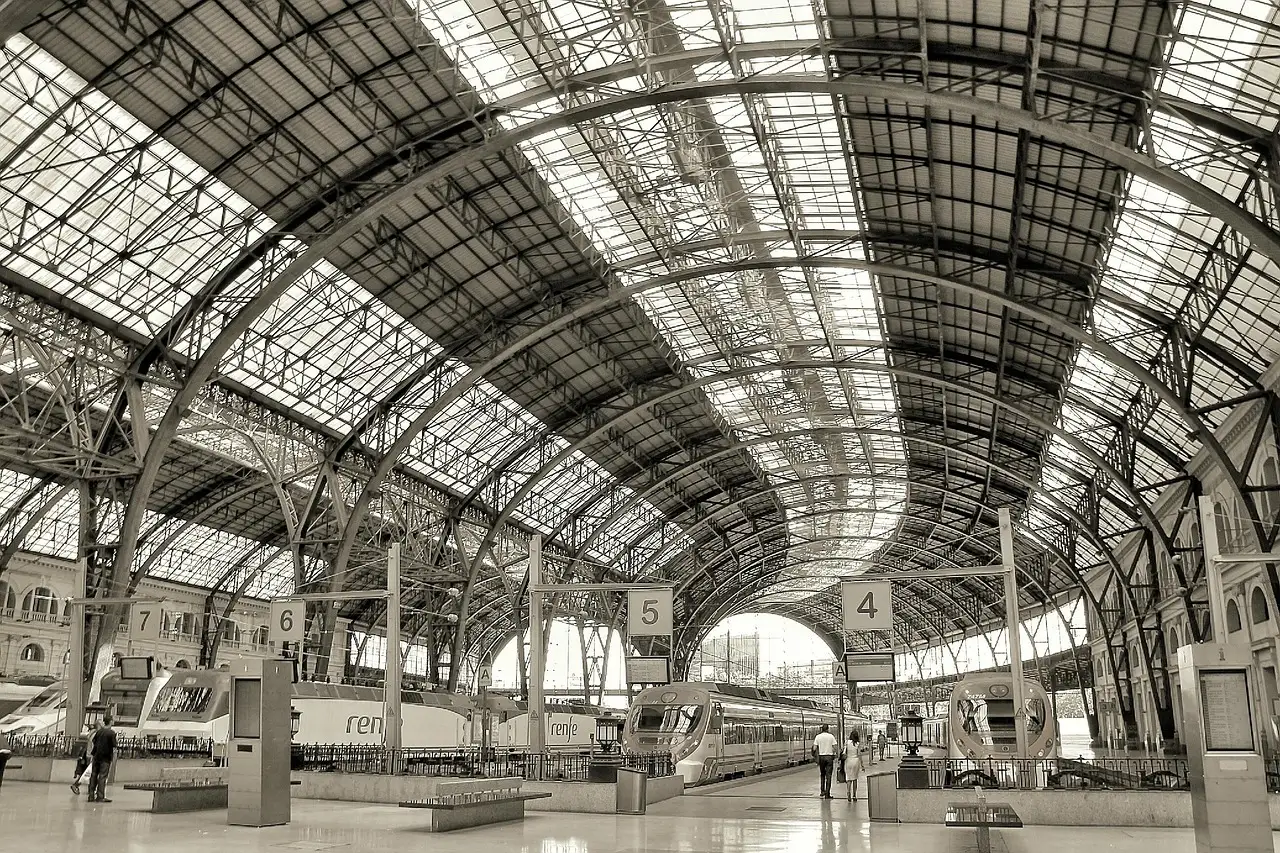
Barcelona Sants train station is the city's main station for Renfe's high-speed and long-distance trains, and it also serves several Rodalies commuter lines. Montserrat is the big exception, because its trains leave from Plaça Espanya. Below, four steps cover which station to use, how to get to Sants, how to buy a ticket, and where the day trips start.
A train day works best when you know in advance which station each train leaves from.
Step 1: Choose the right station for your train
Barcelona Sants train station is the right one for most trips out of the city. Renfe runs its high-speed and long-distance trains there, for example on the routes to Girona and Figueres, and the train from Madrid is one of Renfe's long-distance routes. The Rodalies commuter lines R1, R2 and R4 also stop at Sants.
Three other stations matter. Passeig de Gràcia and Estació de França are the other Barcelona stops on the R2 line, which runs from Castelldefels to Granollers Centre. Plaça Espanya is where the FGC trains to Montserrat leave, every hour from 08:26, according to the Montserrat visitor site. The Sants bus station is next to the train station.
Renfe lists car rental among Sants' services, along with parking and a taxi rank. It lists no shops or cafes inside the station, so bring water and a snack for a long wait. Most of the trips below work without a barcelona rental car, so weigh the train against a car before you book one.
| Step | What to do | What to watch for |
|---|---|---|
| 1 | Pick the station | Montserrat leaves from Plaça Espanya, not Sants |
| 2 | Get to the station | Taxis from Sants add a fixed supplement |
| 3 | Buy the ticket | Rodalies and Renfe long-distance tickets are different products |
| 4 | Take the day trip | Check Rodalies service notices on the day |
Step 2: Get to Barcelona Sants train station
You can reach Sants by metro, bus, commuter train or taxi. Renfe says the station connects to the metro and bus network, and the TMB app shows the lines for your start point. The Renfe pages do not name the metro lines, and the TMB line pages do not list stops, so check your route in the TMB app before you leave.
From the airport, the R2 Nord goes straight to Sants. On weekdays, Rodalies runs one train every 30 minutes between the airport and Sant Celoni, and it calls at Barcelona-Sants, Passeig de Gràcia and Estació de França. Our airport guide compares it with the metro and the Aerobús.
A taxi is the easy option with luggage. The metropolitan taxi authority sets a supplement of €2.55 for rides that start at Sants, on top of the meter. A taxi from Sants to your hotel pays that fee at the start.
Check the opening hours before an early train. Renfe lists the station as open from 04:15 to 00:30 on weekdays except holidays, and from 05:00 to 00:30 on Saturdays, Sundays and holidays. For an early train, the where to stay page helps you choose a district with a short ride to the station.
Step 3: Buy your ticket and find your train
Buy your ticket before you travel, because Renfe says the cheapest fares go to people who book ahead. The station has ticket machines, a ticket office and a customer service desk. Renfe's page lists no shops or cafes in the station, only shops and restaurants on the nearby Gran Via. Rodalies commuter trains and Renfe long-distance trains are separate services, so look for the right one.
Know which kind of ticket you hold. A Renfe high-speed or long-distance ticket includes a free Cercanías trip, which is Renfe's name for the commuter trains. The Hola Barcelona Travel Card covers Rodalies in zone 1, so it works for the commuter lines inside the city but not for a long-distance train. The TMB page for the card lists what it covers.
Boarding is where official pages say little. They do not say how early to arrive or how the gates work, so read your ticket for the platform and train number and check the departure board when you arrive. Rodalies also publishes line maps on its website, which show every stop of the R1, R2 and R4.
Pro Tip After a landing at the airport, when your next train leaves from Sants, take the R2 Nord, which calls at Barcelona-Sants, and keep your Cercanías-inclusive Renfe ticket if you have one.
Keep your bag in front of you in the station. The city's visitor safety page says pickpockets concentrate in crowded public places such as metro stations and monuments.
Step 4: Take a day trip by train from Sants
The trains from Sants reach Girona, Sitges, the coast and PortAventura, and Montserrat takes one extra change. Pick your trip, then decide whether to go by train or with a tour. The train costs less and lets you choose your own hours. A tour includes the transport and one guide for the whole day, so it is worth the extra cost when you want several stops without planning. No listing here states a group size.
Of the 528 Barcelona listings this site counted on GetYourGuide on 26 October 2026, 39 are day trips, and 14 of those list pickup.
Montserrat. The FGC train leaves from Plaça Espanya, a short trip from Sants, and the R5 line also links to the cable car and rack railway stations. On your own, the Montserrat monastery ticket with the boys' choir is from €25 a person and has 4.4 stars from 149 reviews, but it does not include transport from Barcelona. To skip the change of trains, the half-day Montserrat small-group tour is from €35.10, lasts 5.5 hours and includes a round-trip transfer from central Barcelona. It has 4.8 stars from 1,894 reviews, with free cancellation.
Girona and Figueres. Renfe says the first train from Sants to Girona leaves at 06:55. Figueres lies toward the French border, and trips like it sit with the other france day trips from barcelona for readers who want to go further north. For the stops on the coast, the R1 runs from Sants to Blanes, and Rodalies lists a Train + Bus offer for Blanes, Lloret and Tossa de Mar. Our Girona guide covers the trains, and it is a good start for any barcelona to costa brava day. To skip the regional train, the Girona, Figueres, Dalí Museum and Cadaqués day trip is from €62.28, lasts 11 hours and meets at Plaça d'Anna Lizaran in Eixample. It has 4.7 stars from 2,403 reviews, with free cancellation, and it is not suitable for wheelchair users.
Sitges and the south. The R2 Sud serves Sants, Passeig de Gràcia and Sitges, according to the Rodalies page for the R2. The R4 line crosses the city through Plaça de Catalunya and Sants and goes on to Martorell, Sant Sadurní d'Anoia and Vilafranca del Penedès, as the Rodalies page for the R4 shows. The PortAventura page notes works between Garraf and Sitges, with a replacement transport plan between Barcelona and Sant Vicenç de Calders, so check the Rodalies notices before you go.
PortAventura. The park has its own station on the R17 and RT2 lines. PortAventura's own page says its park ticket includes a free round-trip train ticket from a Catalan station. It does not say whether tickets from resellers qualify, so ask before you count on it. The PortAventura and Ferrari Land ticket is from €52.50 a person and has 4.3 stars from 2,748 reviews, and the listing excludes transfers and parking.
One limit applies to all of this. The train works well for one place a day, and it is a poor fit for a day that joins several far-apart stops, such as Girona, Figueres and Cadaqués. A tour with one bus is the better choice there.
Key Takeaway Sants is the station for Girona and the coast, but Montserrat leaves from Plaça Espanya and PortAventura has its own station.
Skip the timetable and book a day trip
Going on your own costs less and lets you pick your hours, while a tour includes the transport and a guide, so a tour pays off when a day joins several far-apart stops. Group size is not stated on any of these four listings. Four picks for readers who would rather not plan the trains: a half-day Montserrat tour from €35.10 with the round trip from central Barcelona included, a Girona, Figueres, Dalí and Cadaqués day from €62.28, a Montserrat monastery ticket from €25 and a PortAventura ticket from €52.50.
-
Half-day Montserrat small-group tour
from €35 per person
Transport from central Barcelona is included, so you skip the change at Plaça Espanya.
5 h 30 min 4.8 (1,894 reviews) Free cancellation
Run by Barcelona Local Experiences
Check availability: Half-day Montserrat small-group tour on GetYourGuide -
Girona, Figueres, Dalí Museum and Cadaqués
from €62 per person
An 11-hour bus day for readers who would rather not take the regional train north.
11 hours 4.7 (2,403 reviews) Free cancellation
Run by buendía · not suitable for people with mobility impairments, wheelchair users
Check availability: Girona, Figueres, Dalí Museum and Cadaqués on GetYourGuide -
Montserrat monastery ticket with the boys' choir
from €25 per person
The ticket for readers who take the train on their own and want to enter with the choir.
4.4 (149 reviews) Free cancellation
Run by MONASTERIO MONTSERRAT
Check availability: Montserrat monastery ticket with the boys' choir on GetYourGuide -
PortAventura and Ferrari Land ticket
from €53 per person
The park has its own station on the line south from Sants.
4.3 (2,748 reviews) Free cancellation
Run by PortAventura World
Check availability: PortAventura and Ferrari Land ticket on GetYourGuide
Prices and ratings as shown on GetYourGuide on 25 October 2026.
Day trips from BarcelonaFAQ
Where is Barcelona Sants train station?
Which metro line goes to Barcelona Sants?
Are there shops and cafes at Barcelona Sants station?
What is the main train station in Barcelona?
Where can I go from Barcelona by train?
How do I use the train in Barcelona?
Conclusion
Use Sants for long-distance trains, for Girona and for the coast, and use Plaça Espanya for Montserrat. Buy your ticket ahead, check the Rodalies notices on the day you travel, and keep your bag in front of you in the station. When a train day sounds like too much work, a day trip with transport included is the easy way to see the same places.
Related guides
Sources
- Renfe, Estación de Barcelona Sants, last checked 26 October 2026
- Rodalies de Catalunya, Line R2, last checked 26 October 2026
- Rodalies de Catalunya, Line R4, last checked 26 October 2026
- Montserrat Visita, Links with FGC trains, last checked 26 October 2026
- PortAventura World, How to get to PortAventura, last checked 26 October 2026
- TMB, Hola Barcelona Travel Card, last checked 26 October 2026
- AMB Taxi, 2026 urban taxi tariffs, last checked 26 October 2026