Barcelona Food: Seven Dishes to Try
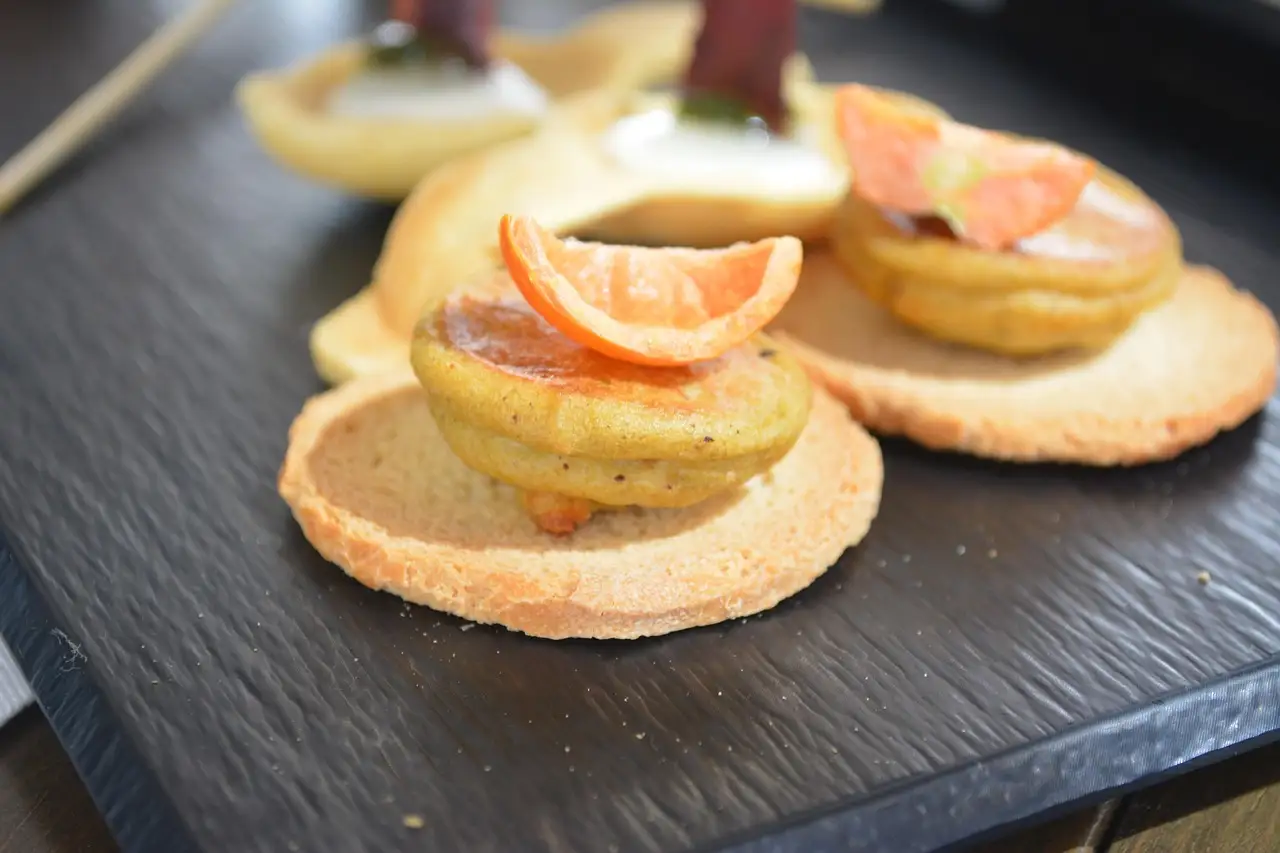
Barcelona food is built on simple Catalan dishes such as pa amb tomàquet, escalivada and crema catalana, plus tapas and market snacks you can try in a day. Below are seven dishes with what each one is and where to taste it. A short guide at the end shows what a meal costs and when a food tour is worth it.
The easiest way to understand a city's food is to start with the simple dishes that locals eat every week.
1. Pa amb tomàquet: the simple start to Catalan food
Pa amb tomàquet is bread rubbed with tomato, olive oil and salt, and it is the best first taste of Catalan cooking. The Barcelona tourist board's guide to Catalan cuisine says the dish comes down to four basics: bread, tomato, olive oil and salt. It began as a way to make dry bread tasty.
You can add cheese, anchovies or cured meats on top. The same guide names butifarra sausage and escalivada as good partners. Order it as a side with almost anything, and it costs very little. The tourist board does not say when to eat it, and no official page we found gives a typical Catalan breakfast or dinner time, so check a restaurant's hours before you go.
If you would rather taste with a guide, foodie tours Barcelona cover several of these dishes in one walk.
2. Escalivada: smoky vegetables served cold
Escalivada is a cold dish of aubergine, peppers and onions that are cooked slowly over embers. The tourist board explains that the name comes from the Catalan word for embers, caliu. The vegetables are peeled, pulled apart and dressed with olive oil, and nothing more.
Escalivada works as a starter or a side. Eat it with bread and, if you like, with the anchovies or sausage from entry 1. Because it is a plain dish with few ingredients, order it where you can see the vegetables on the menu as a starter.
3. Tapas: small plates you share
Tapas are small plates you share, and in Barcelona they are the easiest way to try many dishes in one evening. The tourist board's Catalan cuisine page lists dishes, not tapas, so tapas are not one typical Catalan dish. Think of them as a way to eat: small shared plates, found all over the city. A good order mixes a few cold plates and a few hot ones. Think croquettes, patatas bravas, peppers and a small portion of paella, then something sweet.
A guide can take away the guesswork. The food walking tour with tapas and wine is from €71.10 a person and lasts 2.5 hours. The tour has 4.9 stars from 2,634 reviews and free cancellation. Carpe Diem Tours runs it, and the listing includes nine tapas tastings and four drinks in the Gothic Quarter and El Born. The listing has two meeting points, depending on the option you pick, and it does not name them, so the booking page is the only place to see yours. It does not state a group size. Additional drinks are not included, and the listing says it is not suitable for wheelchair users.
Pro Tip Tell the food tour about allergies when you book. The tapas walk lists vegetarian options on request, but it says vegan and gluten-free options are not available.
4. Calçots and salsa de calçots: the sauce is the point
Calçots are a humble onion grown under layers of earth, and the sauce that comes with them, salsa de calçots, is the real star of the meal. The tourist board says the sauce is made with nuts, roasted tomato, garlic, olive oil and ñora pepper, and that it is pounded together in a method called picada. It is also called salvitxada.
A meal with calçots is called a calçotada, and it is messy. The board jokes that the unofficial uniform is a bib. The page does not give a season for calçots, so ask the restaurant if they are on the menu before you book a table.
5. Escudella i carn d'olla and canelons: the Christmas dishes
Escudella i carn d'olla is a Catalan soup and stew made from one pot, and canelons de Sant Esteve are the cannelloni made from its leftovers. The tourist board calls it the great national dish of Catalonia. Vegetables, pulses, meat and bones simmer for hours. The broth is the escudella, and the meat is the carn d'olla.
The cannelloni are eaten on Sant Esteve, 26 December. The board says the filling is the meat left from the day before. These are family dishes at Christmas, so a restaurant menu may not list them in summer. If you visit in December, look for them.
6. Crema catalana: the dessert with a burnt-sugar top
Crema catalana is a custard of milk, egg yolk and sugar with a hint of lemon and cinnamon, and its top is burnt into a thin caramel crust. That is the tourist board's description, and it is why the dessert is easy to spot on a menu.
Order it at the end of a meal, and share one if you are full. It is a good way to end a tapas night.
Key Takeaway Start with three dishes that use only a few ingredients: pa amb tomàquet, escalivada and crema catalana. The Barcelona tourist board lists all three as part of Catalan cuisine.
7. Mercat de la Boqueria: where to taste it all
The Mercat de la Boqueria is the best single place to see and taste Barcelona food, and it is open Monday to Saturday from 8:00 to 20:30. The market's own website says it stands at Rambla 91, has been in the city centre since 1836 and has more than 200 traders. The city tourist board's list of Barcelona markets describes it as a lively food market with fresh local produce next to international specialities.
Check the hours on the market's own site before you go, because the official page is the only source for them. The official Boqueria site also lists building work from 2027 to 2029, so expect changes in the next years.
A short guided walk can include the market. The street food tour with a local market visit is from €45 a person and lasts 2.5 hours. The tour has 4.8 stars from 164 reviews and free cancellation. Francesca Tours runs it, it starts at the Joan Miró mosaic on La Rambla, and the listing does not state a group size. The listing says it is not suitable for vegans, people with gluten intolerance or wheelchair users. Drinks and transport are not included, and you should tell the provider about allergies before you go.
How to choose where to try Barcelona food
Choose the market for a cheap taste, a guided walk for a first evening and a class if you want to cook. Eating on your own is easy, because every dish above is on regular menus and market stalls, and you can walk in without a booking. A guided tour is worth it when you want a guide to choose the places, and it is the wrong choice if you want to wander or eat a vegan or gluten-free diet.
Things to Do in Barcelona counted 528 GetYourGuide listings for Barcelona and nearby towns on 26 October 2026, and 73 of them have food, tapas or paella in the title, with starting prices from €15 to €480.
A sit-down meal has its own price. In 2026, published prices put a meal at a mid-range restaurant in Barcelona at €20 to €35, as the 2026 Barcelona Travel Cost Study reports.
If you want to cook, the Spanish cooking class with a Boqueria market tour is from €99 a person and lasts three to four hours. The class has 4.9 stars from 416 reviews and free cancellation. Barcelona Cooking runs it. Groups have up to 24 people, and the price includes food, wine and recipes. The listing says there is no market tour on local and national holidays or for evening classes.
| Option | Best for | Cost | What to check |
|---|---|---|---|
| Market stalls | A cheap taste of local food | Pay per snack | Open Monday to Saturday, 8:00 to 20:30 |
| Tapas and wine walk | A first evening with a guide | From €71.10 a person | Two meeting points, depending on the option you pick |
| Street food and market tour | A short, lower-priced walk | From €45 a person | Not for vegans or gluten intolerance |
| Cooking class | Learning the dishes | From €99 a person | No market tour on holidays or in evening classes |
| Mid-range restaurant | A relaxed sit-down meal | The study's published range | Look at the menu before you sit |
Is eating out in Barcelona expensive? It depends on how you eat, and the one published figure is for a mid-range restaurant. A sit-down meal at a mid-range restaurant costs the range above, market stalls charge per snack, and a guided food walk starts at €45 a person. No official page we found publishes a price range for cheap or high-end restaurants, so we give none. Check the menu, which usually shows prices, before you sit down. Eating on your own is cheaper, but it needs more planning. Tapas and market snacks come at many price levels. A guided walk costs more because it adds a guide, several tastings and drinks. Check the booking page for the meeting point before you go, and plan the day so you arrive a little early.
If you are still planning the trip, the Barcelona tours page lists more things to book, and the where to stay page helps you pick a district near the food.
Taste Barcelona food with a guide or in a class
Three picks for different tastes: a tapas and wine walk from €71.10, a street food and market tour from €45, and a cooking class with a Boqueria market visit from €99, each a price per person with free cancellation as GetYourGuide shows it. They have 4.8 to 4.9 stars from 164 to 2,634 reviews, and the walks last 2.5 hours. The tapas walk has two meeting points that the listing does not name, the street food tour starts at the Joan Miró mosaic on La Rambla, and the class meets at Barcelona Cooking, La Rambla 58. The tapas and street food listings do not state a group size, so ask the provider before you book, and the class has up to 24 people. The class lasts three to four hours and starts at its own address, so arrive a little early. Extra drinks are not included on the tapas walk, drinks are not included on the street food tour, and tips are not included in the class.
-
Food walking tour with tapas and wine
from €71 per person
Nine tapas tastings and four drinks in the Gothic Quarter and El Born, for readers who want a guide to pick the places.
2 h 30 min 4.9 (2,634 reviews) Free cancellation
Run by Carpe Diem Tours · not suitable for wheelchair users, vegans
Check availability: Food walking tour with tapas and wine on GetYourGuide -
Street food tour with a market visit
from €45 as listed
A shorter, cheaper walk that includes La Boqueria, from €45.
2 h 30 min 4.8 (164 reviews) Free cancellation
Run by Francesca Tours · not suitable for wheelchair users, vegans, people with gluten intolerance
Check availability: Street food tour with a market visit on GetYourGuide -
Spanish cooking class with a Boqueria market tour
from €99 per person
For readers who want to cook the dishes themselves and eat what they make.
3–4 hours 4.9 (416 reviews) Free cancellation
Run by BARCELONA COOKING
Check availability: Spanish cooking class with a Boqueria market tour on GetYourGuide
Prices and ratings as shown on GetYourGuide on 25 October 2026.
La Boqueria market tours and tastingsFAQ
What food is Barcelona known for?
How much is food in Barcelona?
Is food expensive in Barcelona?
Does Barcelona have good food?
What time do restaurants in Barcelona serve dinner?
What is a typical Catalan breakfast?
What food should I eat in Barcelona?
Conclusion
Start with the simple Catalan dishes, pa amb tomàquet, escalivada and crema catalana, and add tapas and a market visit. Eat on your own if you like to wander and choose, and book a guided walk if you want someone to pick the places and explain the food. Check the opening hours before you go, because a market can change its hours.
Related guides
Sources
- Turisme de Barcelona, Catalan cuisine (This is Barcelona), last checked 26 October 2026
- Turisme de Barcelona, Barcelona's markets, last checked 26 October 2026
- Barcelona City Council, Hours and customs, last checked 26 October 2026
- Spain Tourism (Turespaña), Information of interest about Spain, last checked 26 October 2026
- Mercat de la Boqueria, Official site: opening hours and history, last checked 26 October 2026